

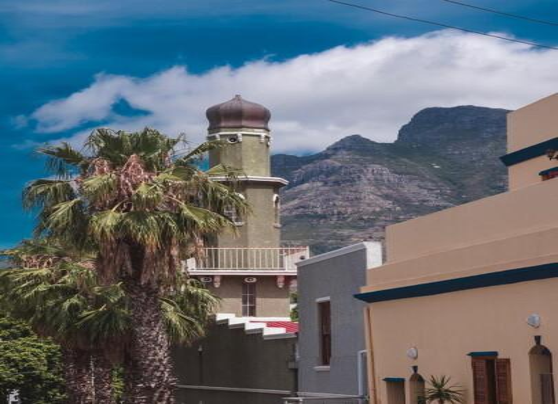
An old claim suggesting that the City of Cape Town has classified the Athaan, the Muslim call to prayer, as a “nuisance noise” is being recirculated on WhatsApp, according to a warning shared by Cape Town councillor Aslam Cassiem.
The message has raised concern that new restrictions may have been introduced against the call to prayer.
However, City of Cape Town documents and reports surrounding the original controversy do not support claims that a new law has been passed in 2026 declaring the Athaan a nuisance.
Instead, the claim draws on a years-old dispute over Cape Town’s noise regulations that dates back to before the 2021 municipal elections.
Table of Contents
Start of the Athaan Controversy
The issue attracted significant attention in 2021 when the GOOD Party and Democratic Alliance clashed over amendments to Cape Town’s Streets, Public Places and the Prevention of Noise Nuisances By-law.
GOOD argued that the amendments failed to explicitly exempt religious sounds such as the Athaan and church bells.
The DA disputed claims that the City had effectively criminalised religious calls to prayer.
Importantly, GOOD itself acknowledged at the time that the amendments adopted by the City did not outlaw the Athaan.
The political dispute unfolded shortly before South Africans went to the polls in the municipal elections on 1 November 2021, providing important context to social media posts from that period that may now be shared without their original timeline.
Mosque Complaint Helped Fuel the Debate
The controversy had deeper roots.
According to a 2021 statement by GOOD mayoral candidate Brett Herron, a noise complaint was lodged against the historic Zeenatul Islam Masjid in District Six in 2019.
Herron said testing found that the Athaan did not exceed the applicable decibel threshold, but that the complaint was considered under a separate “reasonable person” assessment contained within the City’s noise framework.
The incident became part of a broader debate about whether Cape Town’s noise regulations adequately protected religious practices.
That history is important because the current claim is linked to a genuine earlier controversy. What can be misleading is presenting that dispute without its original date and context, creating the impression that Cape Town has recently introduced new restrictions against the Athaan.
What the City of Cape Town Actually Says
The City subsequently clarified how its noise regulations apply to religious institutions.
In April 2022, the City announced an update to its Standard Operating Procedure for noise complaints, confirming that the “Noise Nuisances” section of the by-law does not apply to places of worship operating within appropriate zoning.
The City said the procedure was intended to provide clarity on how noise complaints involving places of worship should be handled.
It also recognised the constitutional importance of religious practice and said the procedure sought to balance the rights of religious communities with those of surrounding residents.
This clarification is central to understanding the claim being shared.
Cape Town still regulates excessive noise more broadly, and residents can report noise disturbances to the City. However, those general noise-control provisions should not be confused with a new rule specifically classifying the Athaan as a nuisance.
Old Screenshot New Confusion
Social media screenshots can circulate without publication dates, original links or the context surrounding a dispute.
In this case, references to voting on “1 November” are consistent with the timing of South Africa’s 2021 municipal elections, when the Athaan controversy became a political issue in Cape Town.
Years later, removing that timeline can make an old political dispute appear to be a current development.
The distinction is particularly important when claims involve religious practices and have the potential to create unnecessary concern or tension within communities.
Arthaan Woven into Cape Town’s Muslim Heritage
The issue also reaches beyond noise regulations.
The Athaan has formed part of the cultural and religious landscape of communities such as Bo-Kaap for generations.
In March 2026, Al Jazeera reported on concerns among Bo-Kaap residents about the impact of gentrification, foreign property ownership and short-term rentals on the historic neighbourhood’s Muslim identity.
The report described the Athaan sounding from Auwal Masjid, South Africa’s oldest mosque, which dates back to 1794.
That history helps explain why claims involving restrictions on the Athaan can resonate strongly in Cape Town. But concerns over preserving Muslim heritage should not be confused with what current City regulations state.
What Do the City’s Rules Currently Show?
The City of Cape Town sources reviewed for this article do not support claims that a new law has been passed in 2026 classifying the Athaan as a “nuisance noise”.
The claim instead draws on a genuine but much older controversy involving Cape Town’s noise regulations and religious sounds.
A significant clarification came in 2022, when the City confirmed that the “Noise Nuisances” provision of its by-law does not apply to places of worship operating within appropriate zoning.
For readers receiving screenshots making claims about the Athaan, checking the original publication date and comparing the information with current City regulations can help distinguish an old dispute from a new development.
In this case, the available City documentation points to an old controversy being presented without the context needed to understand what Cape Town’s rules currently say.
References
https://forgood.org.za/the-facts-about-the-citys-noise-nuisance-by-laws/
https://alansaargroup.com/cape-town-athaan-nuisance-noise-claim-explained/