

Written by Hudaa Ahmed | Happening News Staff Writer
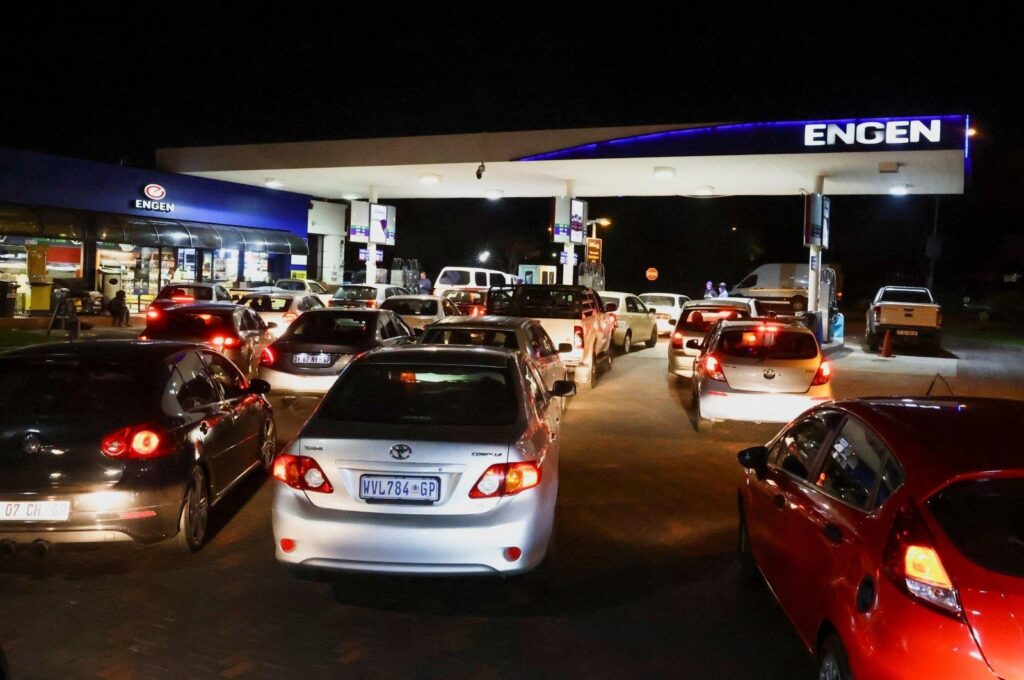
If your fuel gauge is sitting close to empty, last night was not the night to test how far your car can travel on prayer and fumes.
The South Africa petrol price increase for September 2026 took effect at midnight on 1 September, bringing another financial blow for motorists. However, the impact could travel far beyond filling stations and eventually reach grocery shelves, transport fares, delivery charges and household budgets.
From today, Wednesday, 2 September 2026, both grades of petrol will increase by R1.34 per litre at the pumps. Diesel will rise by between R2.94 and R3.15 per litre, while illuminating paraffin and LPG will also become more expensive.
For South Africans already stretching their salaries across food, electricity, transport, school expenses and debt repayments, this is not simply another monthly adjustment. It is another unavoidable cost being squeezed into budgets with very little space left.
September 2026 fuel price increase at a glance
- Petrol 93 and 95: Up R1.34 per litre
- Diesel 0.05% sulphur: Up R2.94 per litre
- Diesel 0.005% sulphur: Up R3.15 per litre
- Inland 93 petrol price: Approximately R26.76 per litre
- Inland 95 petrol price: Approximately R26.92 per litre
- Coastal 95 petrol price: Approximately R26.05 per litre
How much are petrol and diesel prices increasing?
A 45-litre petrol fill-up will cost approximately R60 more from Wednesday. Someone filling a 100-litre diesel tank could pay up to R315 more than they did in August.
Wholesale diesel will climb as high as R30.05 per litre inland, although the final amount charged may differ between filling stations because diesel retail prices are not regulated.
Those are the figures. The real story is where the September fuel price increase travels next.
Petrol prices dominate conversations because motorists see the damage immediately when they fill their tanks. Diesel, however, powers much of the economy operating behind the scenes.
It fuels trucks carrying food to supermarkets, delivery vehicles moving parcels between cities, farming machinery producing crops and generators keeping businesses running during electricity interruptions.
The domino effect is simple.
Diesel powers the truck. The truck carries the food. The retailer pays more to receive it. Eventually, the customer may meet that additional cost at the till.
Businesses cannot absorb rising transport and operating expenses forever. Some may carry part of the increase, but others may have to raise prices, reduce deliveries or cut costs elsewhere.
This means South Africans who do not own vehicles are not protected from the diesel price increase. Taxi passengers, online shoppers and households buying everyday essentials could all feel its wider effects.
Why are fuel prices increasing in South Africa?
The biggest driver behind the new petrol price in South Africa is the rising international cost of oil.
The average Brent crude oil price increased from about $82.37 to nearly $87.88 per barrel during the review period. Continued tensions between the United States and Iran, uncertainty over oil moving through the Strait of Hormuz and higher shipping costs have placed pressure on global fuel markets.
The Russia-Ukraine conflict and lower international fuel inventories have added to the strain, particularly for diesel.
South Africa received some relief from a stronger rand, which reduced part of the expected increase. Unfortunately, the currency did not strengthen enough to cancel out the rise in international prices.
The Slate Levy also increased from 61.38 cents to 83.28 cents per litre. This levy compensates fuel companies when South Africa’s regulated fuel price does not cover the actual cost of importing fuel.
Put simply, the international fuel market ran up a spectacular bill, and South African motorists have once again been invited to help settle it.
For anyone already planning to refuel, filling up before midnight could offer a useful once-off saving. Buying 40 litres of petrol tonight could save approximately R54, while filling an 80-litre diesel tank could save between R235 and R252.
There is no need to panic-buy or queue for an hour to squeeze a few litres into an almost full tank. However, motorists who need fuel within the next few days would be better off filling up before the new prices take effect.
Wednesday’s increase will first appear on filling-station boards, but it will not remain there. As transport and operating costs rise, the impact could quietly make its way into taxi fares, delivery bills, business expenses and grocery prices.
South Africans are not only paying more to drive from Wednesday. We may soon be paying more for almost everything that has to travel before it reaches us.
Source:
https://www.businessday.co.za/economy/2026-09-01-businesses-and-households-brace-for-higher-costs-as-fuel-prices-jump
https://www.dailymaverick.co.za/article/2026-08-31-sa-motorists-cant-escape-the-petrol-price-pain-in-september/