Girls should not have to suffer in silence.
The I_Menstruate Movement has called for urgent systemic action linking menstrual health directly to mental wellbeing, dignity and education equity.
75% girl learners surveyed in I_Menstruate Movement’s Bleeding in Silence: Barriers to Menstrual Hygiene Among School Girls in South Africa research reported distress at menarche, their first menstruation. This finding highlights an often-overlooked dimension of menstrual health: the emotional impact of navigating menstruation without adequate information, resources and support.
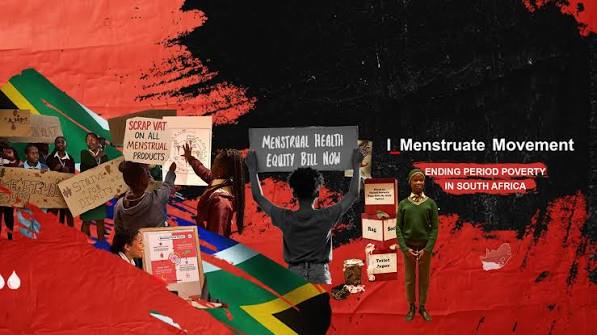
Table of Contents
World Mental Health Day
As we commemorate World Mental Health Day on 10 October and the International Day of the Girl Child on 11 October, I_Menstruate Movement is calling for urgent action to address the systemic barriers that undermine girls’ dignity, mental wellbeing, safety and right to education.
The Movement is marking these commemorations in Maseru, Lesotho, through participation in the 29th Ordinary Session of the Civil Society Organisations Forum, the 48th Ordinary Session of the African Committee of Experts on the Rights and Welfare of the Child (ACERWC), and a side event on Utilising the ACERWC Mechanisms for Universal Child WASH and Menstrual Hygiene, hosted by the Centre for Human Rights based at the University of Pretoria.
Our participation brings the lived experiences of children in South African schools into continental conversations on children’s rights and accountability. It reinforces a central message of our work: menstrual health cannot be separated from mental wellbeing, education, safety, dignity and equality.
Mental Wellbeing Connection
The I_Menstruate Movement emphasizes that while menstruation is natural, a lack of products, clean water, safe school toilets (WASH facilities), and accurate information turns periods into a source of anxiety, shame, and social exclusion.
Research and Impact
I_Menstruate Movement’s foundational study, “Bleeding in Silence,” revealed that 83% of school-going learners lack regular access to menstrual products, and 75% experience emotional distress during their first period (menarche).
Legislative Action
The movement is pushing for the adoption of a proposed Menstrual Health Equity Bill—developed via child-led research and presented to South African parliamentary committees—to legally recognize menstrual health as a fundamental human right.
Continental Engagement
The call to action was heavily spotlighted during global and regional commemorations such as World Mental Health Day and the International Day of the Girl Child, extending advocacy through mechanisms like the African Committee of Experts on the Rights and Welfare of the Child (ACERWC) in Maseru, Lesotho.
Menstrual Health is More Than Access to Products
When girls lack menstrual products, clean water, safe toilets and accurate information, menstruation can become a source of anxiety, shame and exclusion. Stigma and fear of embarrassment can make it difficult for children to ask for help, participate confidently at school or manage menstruation with dignity.
Menstruation itself is not a mental health problem. However, the conditions surrounding it, including stigma, inadequate facilities and a lack of support, can contribute to emotional distress. Governments must therefore treat menstrual health as an essential part of protecting children’s physical and mental wellbeing, rather than leaving girls to navigate these challenges alone.
At I_Menstruate Movement, we challenge these systemic barriers through participatory research, child-led advocacy, education and movement-building. Our Menstrual Health Equity Bill, developed through a child-led process with school-going members, demonstrates that children can identify policy failures and help shape the legislative protections needed to address them.
We believe girls must not only be heard when policies are developed; they must have meaningful opportunities to shape solutions, influence public investment and hold decision-makers accountable.
From Commitments to Action
We call on governments across South Africa and Africa to invest in safe and accessible school WASH facilities, reliable access to menstrual products, age-appropriate menstrual health education and supportive environments where children can speak openly without fear or stigma. These commitments must be backed by adequate budgets, clear responsibilities and mechanisms to monitor implementation.
Continental platforms such as the ACERWC provide important opportunities for civil society to bring evidence of children’s lived experiences into regional accountability processes and press governments to fulfil their obligations. Children, especially girls, must be part of these processes, not simply the subjects of policies designed by adults.
As we mark these two important days, our message is clear: girls should not have to endure shame, distress or exclusion because they menstruate. Menstrual dignity is a matter of children’s rights, and those rights must be protected, resourced and fulfilled.
We must stop asking girls to adapt to systems that fail them and start changing those systems.