

JOINT STATEMENT
Cape Peninsula Baboon Management Joint Task Team
City of Cape Town
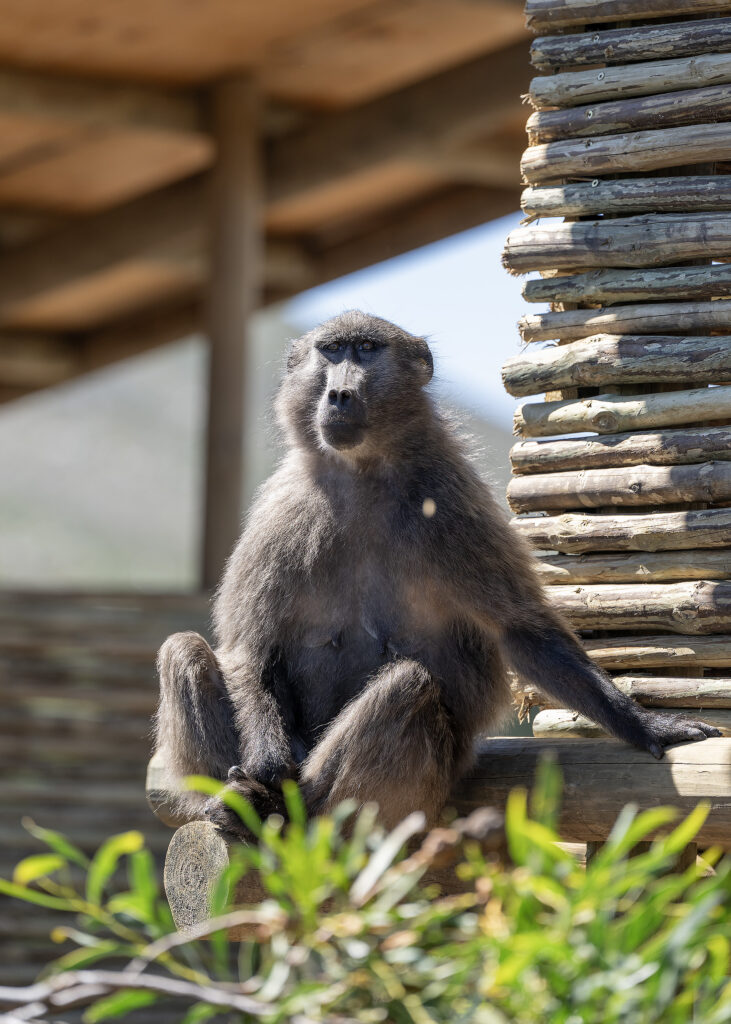
Waterfall Troop Safe – Contrary to misinformation on social media platforms, the Waterfall baboon troop is, for the first time in over a decade, safe from dangers in the urban environment. The troop is settling in at the wildlife centre at Kogelfontein, on land that is located in a natural area next to Table Mountain National Park.
For the first time in over a decade, the Waterfall baboon troop is safe from dangers in the urban environment.
Also see: Baboons and Your Waste – Deal with waste responsibly
Table of Contents
Waterfall Troop Safe – Relocation of 44 Baboons
They are no longer subjected to pellet gun shots and dog attacks, or hit by cars while crossing the busy Main Road in Simon’s Town. Neither are they roosting at the Naval Base, scavenging bins for food waste, or breaking into houses and shops.
The Cape Peninsula Baboon Management Joint Task Team (CPBMJTT) consisting of representatives from SANParks, CapeNature, and the City of Cape Town, relocated the 44 baboons to the Urban Wildlife Centre at Kogelfontein over the past weekend of 14 November 2026.
The relocation took place after all other options were investigated and found to be unsustainable, including proposals for a privately funded fence that will take years to implement while leaving the baboons in town where they are getting killed, injured, and maimed.
Waterfall Troop – Latest Update
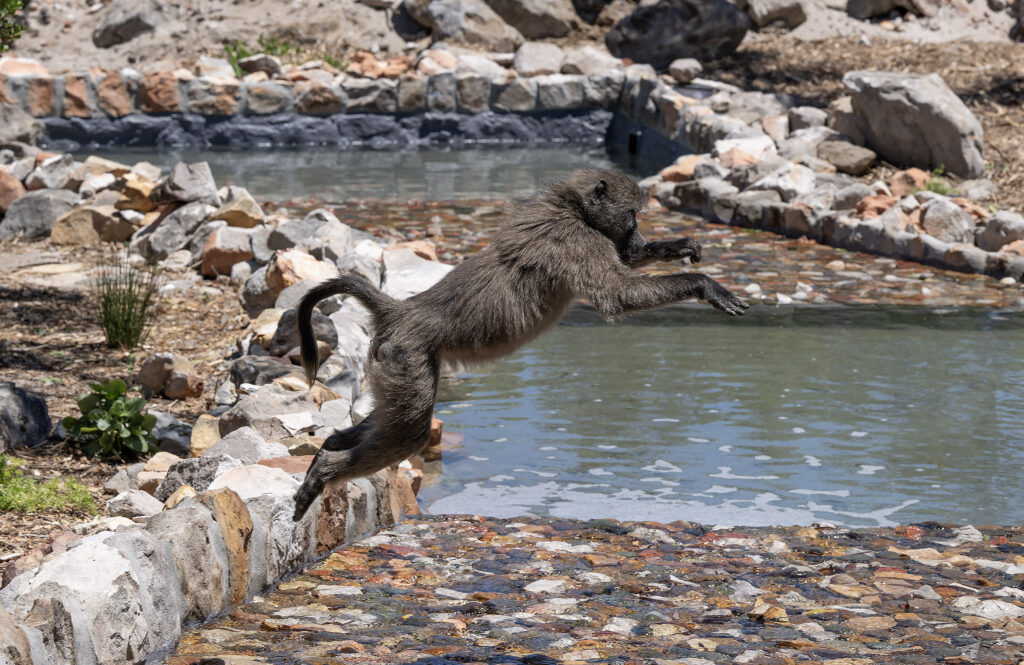
- The baboons are playing, foraging, using the water ponds, and relaxing on the roofs of the custom-designed sleep structures
- Staff are monitoring the baboons 24/7
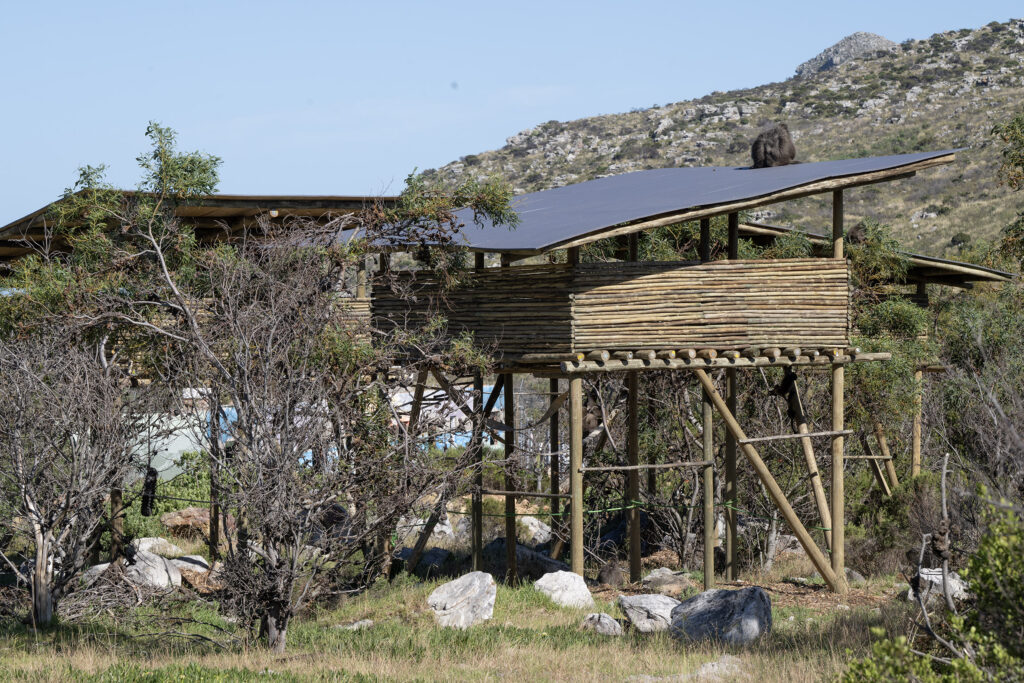
- The centre is located next to Table Mountain National Park. It has riverine features, and stands of indigenous and exotic vegetation, varying heights of thick ground cover, bushes, small trees, rocks and sandy areas for foraging and digging.
- The section where the troop has been released is 2,31 hectares – it exceeds the minimum requirements of the Global Federation of Animal Sanctuaries Standards for Old World Primates approximately 5,5 times
- The baboons have continuous access to fresh potable water for drinking and a pond for cooling
- Their natural diet is supplemented with daily enrichment by using browse and scatter feeding around the enclosures to ensure ongoing environmental novelty
- The enclosure provides shelters for shade, weather protection, and two platforms for sleeping and resting
- A variety of stimuli of vertical and horizontal complexity, and fixtures for climbing and swinging are provided
The Vital Role of Free-Raning Baboons
There are still over 530 free-ranging baboons across the Cape Peninsula and these troops fulfil a vital ecological role in the ecosystem.
The free-ranging baboon population is deserving of conservation and active wildlife management interventions to promote their health, welfare, and sustainability.
Chacma baboons (Papio ursinus) are a keystone species on the Cape Peninsula, where over 530 free-ranging individuals remain active in the wild. These troops have shaped the region’s fynbos ecology for nearly two million years and continue to sustain local biodiversity.
Key Ecological Contributions
- Seed Dispersal. As the largest remaining indigenous omnivores on the Peninsula, baboons are the only moderate-to-large-bodied seed dispersers in the area. They transport seeds across vast mountain and lowland distances through their droppings, helping indigenous plants reproduce and colonize new areas.
- Pollination. While feeding on nectar-rich flowers like proteas, baboons transfer pollen on their fur and muzzles between different plant populations.
- Soil Aeration and Microhabitats. Baboons regularly dig for roots, bulbs, and insects. This constant foraging turns over nutrient-poor fynbos soil, improves water absorption, and creates small microhabitats for insects and smaller reptiles. [1]
- Natural Pest Control. Their opportunistic diet includes rodents, scorpions, and snakes, which helps keep local pest populations balanced across the areas they roam
Source and References
This figure of over 530 free-ranging baboons was highlighted by the Cape Peninsula Baboon Management Joint Task Team (comprising the City of Cape Town, SANParks, and CapeNature) following the November 2026 relocation of Simon’s Town’s 44-member Waterfall troop to the Urban Wildlife Centre in Kogelfontein.
https://www.capetown.gov.za/media-and-news/waterfall-baboon-troop-adjusting-well/
https://ncc-group.co.za/wp-content/uploads/2024/04/Ecological-Role-of-Baboons_March-2024_-002.pdf