

The City’s Water teams are continuing to drive its multi-pronged action plan to help save this precious through its services and infrastructure, ranging from proactively replacing pipes, to detecting leaks and prioritising turnaround times to fix pipe bursts.
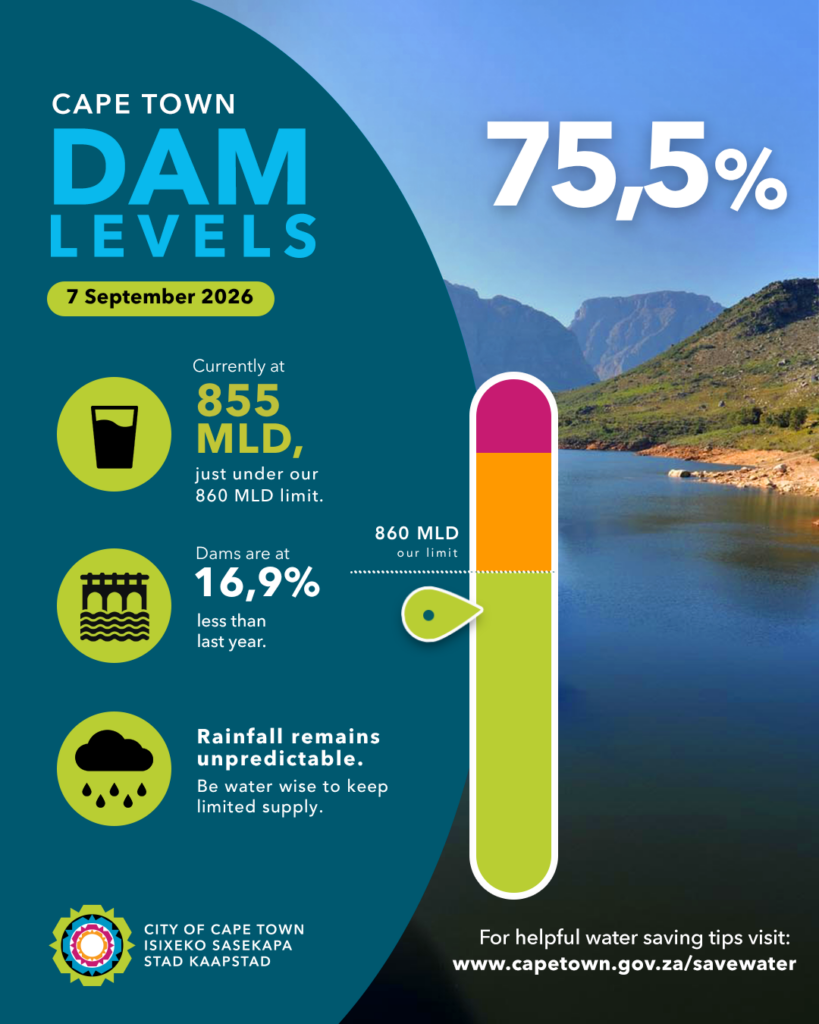
This forms part of a collective effort required, with residents and businesses, to help save water in Cape Town as our dam levels sit at 75,5%. To also navigate unpredictable rain and an expected longer, drier, hotter summer, the City’s Water Restrictions Committee is also considering implementing restrictions as an extra proactive measure to help protect our supply.
Table of Contents
Dam Levels and Usage
- Current dam levels are 75,5% as of Monday, 7 September 2026.
This is16,9% less compared to the same time last year, which was 92,4 %.
- Usage is 855 million litres a day (MLD) on Monday, 7 September 2026. This is five MLD less than the winter usage target of 860 MLD.
Cape Town’s Water Status
- The City’s latest 2026 Outlook does not indicate an immediate risk to the supply, but the risk of restrictions has increased compared with previous years, particularly if demand continues to grow and rainfall is lower than expected.
- The City’s Water Restrictions Committee continues to meet regularly as part of a responsible and proactive approach to managing Cape Town’s resources. The purpose of the committee is to assess availability, track consumption trends, evaluate the effectiveness of saving interventions and consider additional actions that can help reduce demand.
- Currently, our dam levels will need to last us into next winter, through the expected trend of high peak demand in summer, and without depending on unpredictable rainfall. For context, our dam levels dropped by about 40% over this past summer due to peak demand.
- Typically, dam levels need to be 80% or more by the time the next Annual Operating Analysis (AOA) is done by the National Department of Water and Sanitation (DWS) in November to avoid them from implementing restrictions to a municipality. The City through, the Water Restrictions Committee, however can decide to implement restrictions based on its own assessment.
- Restrictions are currently being considered based on a range of factors, including dam levels, current and projected demand, summer peak usage trends and rainfall forecasts both this year and next year.
The City’s Key Initiatives to Reduce Loss
During the 2025/26 financial year, the City has proactively invested in these actions:
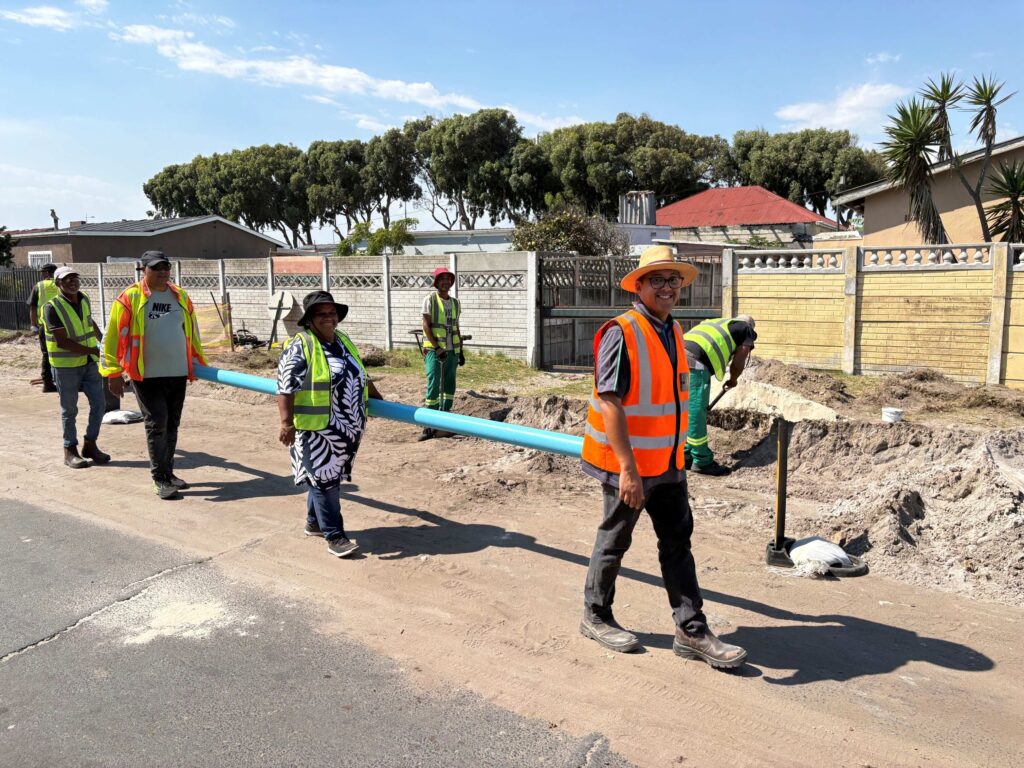
- Annually upgrading aged pipes
88,7 km of pipes were replaced city-wide during 2026/27 financial year
- Finding and fixing leaks annually
Completed visual and acoustic (listening stick) detection across 5 618km and repaired 1 069 leaks, saving more than 8 million litres of water per day.
Daily operations teams repaired 25 625 leaks on connections.
- Clearing alien invasive plant species
On average, about 54 million litres of water is reclaimed daily due to clearing and controlling invasive alien species in the Western Cape Water Supply System since 2019.
- Treated effluent
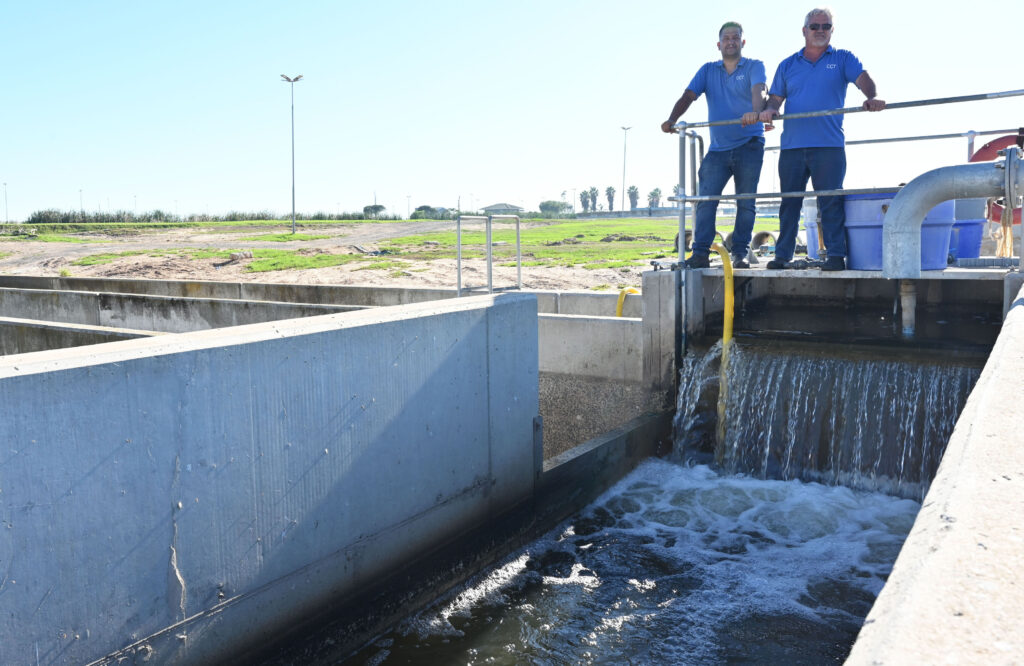
More than eight billion litres of drinking water are saved every year because more residents, businesses and City departments are using treated effluent for non-drinking purposes like irrigation and industrial activities.
Over 12 months, from July 2025 to June 2026, the City saved on average about 7,4% of our supply a month because of the use of treated effluent, which helps to reduce pressure on this precious resource.
Managing demand is vital
‘The City is taking a responsible and measured approach to managing Cape Town’s resources. While the current Water Outlook does not indicate an immediate risk to supply, we are closely monitoring dam levels, rainfall patterns and demand to ensure we remain well prepared for a range of possible scenarios.
‘The City continues to invest in infrastructure upgrades, leak detection and repair, pressure management, improved metering and alternative water sources as part of our long-term resilience strategy. These efforts, together with responsible use across the city, help strengthen our ability to manage changing conditions.
‘Cape Town is a water-scarce city, and using it wisely should remain part of our everyday habits. By working together and maintaining a steady, responsible approach, we can help safeguard our resources for the months ahead,’ said Alderman Zahid Badroodien, the City’s Mayoral Committee Member for Water and Sanitation.
Saving At Your Fingertips
Some 70% of high volume use is at home, according to consumption statistics.
Saving tips: www.capetown.gov.za/savewater
Remember to report burst municipal pipes immediately to the City’s formal channels:
- Call 086 010 3089 (select option 2)
- SMS 31373
- WhatsApp 060 018 1505
- Email water@capetown.gov.za
Please provide an exact location or address and always insist on a reference number.
Sources and Reference
Also read: Cape Town’s water supply remains stable, but City prepares for a more uncertain future
City of Cape Town