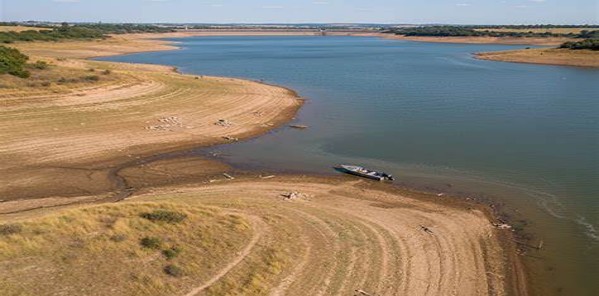
Pietermaritzburg’s water supply could come under increased pressure as a potentially very strong El Niño raises the prospect of hotter temperatures, reduced rainfall and higher water demand across KwaZulu-Natal.
Local, national and international climate authorities are pointing towards significant El Niño conditions during the 2026/27 summer, putting water security and preparedness firmly in focus.
For Pietermaritzburg, the concern is straightforward: what happens if water demand rises while rainfall becomes less reliable?
Table of Contents
El Niño Coul Increase Pressure on Pietermaritzburg Water Supply
Msunduzi Municipality has warned that El Niño conditions could place additional pressure on Pietermaritzburg’s water supply.
Hotter and drier weather can increase household and commercial water consumption while reduced rainfall places pressure on available water resources.
As consumption rises, reservoirs can be drawn down more quickly, while treatment, pumping and distribution systems must continue meeting demand.
The warning puts water conservation in focus ahead of the peak summer period, but the challenge extends beyond household consumption.
Very strong El Niño forecast for 2026/27 summer
The concern extends well beyond Pietermaritzburg.
The World Meteorological Organization has warned that El Niño is expected to become very strong, increasing the risk of extreme weather into 2027.
In South Africa, the government has also cautioned that El Niño is expected to continue through the 2026/27 summer. The phenomenon is typically associated with reduced summer rainfall and higher temperatures across parts of Southern Africa, although its effects can differ between regions.
Experts have also warned of a very strong El Niño during the coming South African summer, with conditions expected to peak between October 2026 and January 2027.
That period overlaps with some of the country’s hottest months, when demand for water can increase.
For Pietermaritzburg, the municipal warning therefore forms part of a much broader weather pattern being monitored across South Africa and internationally.
KwaZulu-Natal Security Under the Spotlight
uMngeni-uThukela Water has also highlighted the potential consequences of El Niño for KwaZulu-Natal.
In its July El Niño update, the bulk water utility warned that prolonged hot and dry conditions could develop into drought and create risks for water security in the province.
The risk becomes more significant when lower rainfall coincides with declining dam storage and increased demand.
Pietermaritzburg forms part of a wider water supply system, meaning local water security is influenced by rainfall, dam storage, bulk water infrastructure and demand.
A prolonged dry period could therefore require authorities to carefully balance available water resources against the needs of households, businesses and essential services.
Why Pietermaritzburg Could Feel the Pressure
El Niño does not automatically mean Pietermaritzburg will face a water crisis.
It also does not mean every water supply interruption can be blamed on weather conditions.
However, prolonged heat and reduced rainfall can add pressure to a system that must continuously treat, pump, store and distribute enough water to meet demand.
The challenge is therefore not only how much water is available. It is also ensuring that available supplies can be managed effectively during periods of increased consumption.
If high temperatures persist and rainfall falls below expectations, the pressure could increase.
What Could El Niño Mean for PMB Residents?
For households, the most immediate response is likely to be a stronger emphasis on water conservation.
Residents may be encouraged to reduce unnecessary consumption, repair leaks, limit excessive outdoor water use and use available water more efficiently.
More severe measures, including possible water restrictions, would depend on how conditions develop and decisions taken by the relevant authorities. Such restrictions are not inevitable.
But conserving water before supplies come under severe pressure could help reduce demand if the summer proves hotter and drier than usual.
Is Pietermaritzburg Prepared for a Hotter, Drier Summer?
Residents have a role to play, but Pietermaritzburg’s water resilience cannot depend on household conservation alone.
Municipal planning, infrastructure management, maintenance, monitoring of water resources and coordination with bulk water suppliers will become increasingly important if strong El Niño conditions persist.
Current forecasts do not guarantee that Pietermaritzburg will experience a severe water shortage. Rainfall patterns can change, and El Niño does not affect every region in the same way.
What they do provide is an early warning.
With the 2026/27 summer approaching and a potentially very strong El Niño developing, the coming months could test how well Pietermaritzburg manages increased pressure on one of its most essential resources: water.
Source and References
Also read: Cape Mainline Restored After Devastating Western Cape Storm Damage
https://umngeni-uthukela.azurewebsites.net/el-nino-update-july-2026
https://wmo.int/news/media-centre/el-nino-set-become-very-strong-raising-risks-of-extreme-weather
https://www.gov.za/news/media-statements/agriculture-el-nino-weather-climate