
Written by Hudaa Ahmed | Happenin News SA staff writer
PIETERMARITZBURG – Is Pietermaritzburg’s Air Secretly Ageing Your Skin? You may be spending hundreds of rands on sunscreen, serums and moisturiser, but one threat to your skin could already be floating through Pietermaritzburg’s air.
Air pollution is usually discussed as a danger to the lungs and heart. However, research suggests that long-term exposure may damage the skin barrier, fuel inflammation and contribute to premature ageing.
That raises an uncomfortable question: could Pietermaritzburg’s air be leaving more than an unpleasant smell behind?
Scientific reviews have examined how airborne particulate matter affects skin. Particulate matter is a mixture of microscopic particles released by vehicle exhausts, industry, fires and burning fuel or waste.
These particles can settle on the skin and collect inside hair follicles. Research suggests this exposure may trigger oxidative stress, a process that damages cells and encourages inflammation.
Over time, pollution may weaken the skin’s protective barrier, increase moisture loss and cause dryness, irritation and sensitivity. Studies have also found associations between polluted air and pigmentation, dark spots, wrinkles, acne and eczema.
Pollution does not need to arrive as a dramatic cloud of smoke. Some effects may develop quietly through repeated exposure.
For Pietermaritzburg, the concern is not hypothetical.
A 2018 provincial environmental report identified Pietermaritzburg as one of KwaZulu-Natal’s most polluted areas, alongside South Durban, Richards Bay, Estcourt and Newcastle.
Vehicle emissions and industrial activity were identified as major local sources. Sulphur dioxide reportedly exceeded safety limits at monitoring stations, while high dust fallout was recorded in Mkondeni.
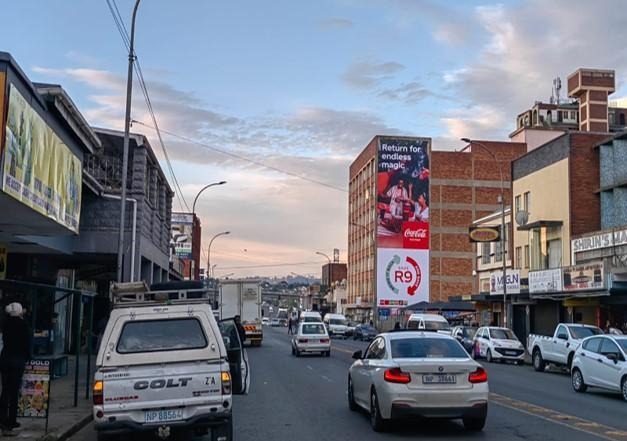
The city’s traffic problem remains impossible to ignore. More vehicles sitting in slow-moving traffic means more exhaust emissions. Industry, domestic fuel burning, veld fires, landfill fires and illegal waste burning add to the pollution residents encounter.
Pietermaritzburg’s geography may make matters worse. During certain weather conditions, polluted air can become trapped instead of dispersing, creating the brown haze sometimes visible above the city.
The greater concern is whether residents receive reliable information about what they are breathing.
In 2025, questions were raised in the KwaZulu-Natal Legislature over claims that provincial air-quality monitoring stations were not operating properly. Pietermaritzburg stations were among those scrutinised.
According to readings accessed on 31 August 2026, the government’s South African Air Quality Information System classified the Pietermaritzburg CBD reading as good. During that same morning, IQAir placed the city in the moderate category, with PM2.5 identified as the main pollutant. The government’s Oribi station was not displaying a current index, with its last update dating to 2 August.
Different locations, instruments and calculation methods can produce different results. Yet those differences leave residents with a question: which reading should they trust?
These readings provide only a snapshot. They cannot prove that the city’s air is consistently safe. Air quality changes according to traffic, wind, temperature, fires and industrial activity. Years of possible exposure cannot be understood through one daily number.
No local scientific study proves that living in Pietermaritzburg automatically makes someone look older. Sun exposure, genetics, smoking, stress, diet and skincare habits also influence ageing.
Still, wider research gives residents reason to pay attention. Pollution may weaken the skin barrier, promote inflammation and contribute to pigmentation and visible ageing.
Residents can reduce exposure by checking air-quality readings, avoiding intense outdoor exercise during pollution spikes, cleansing gently at night, moisturising and wearing sunscreen.
But skincare is not a substitute for public accountability. A R500 serum cannot repair faulty monitoring equipment, reduce traffic emissions or stop illegal burning.
Pietermaritzburg residents deserve consistent, transparent and real-time information about the air around them. Until then, the city may be asking people to protect themselves from a threat they cannot properly see, measure or escape.
Source: https://saaqis.environment.gov.za/dynamicTabulars/MinotoringSiteSummary?utm_source=chatgpt.com | Reuters
Also visit: https://www.facebook.com/MsunduziMunicipalityMarketing